
My Little Princess : Stores
My Town Games LtdEducational
4.228.00 Reviews
- Version
- 7.03.02
- Installs
- 10.00K
- Age Rating
- Everyone
Screenshots
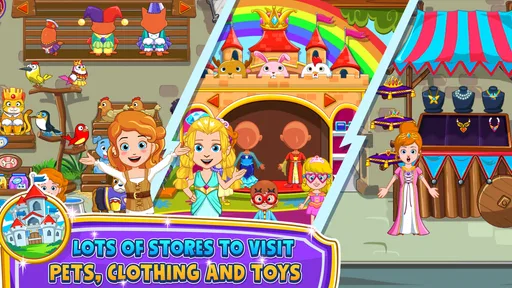
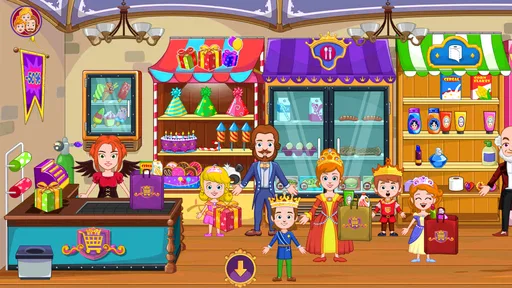
Our Review of My Little Princess : Stores
 Analysis by Appyee
My Little Princess: Stores is an educational castle role-play game from My Town Games Ltd that immediately feels different from a conventional lesson app. Instead of asking a child to complete worksheets or follow a fixed sequence of puzzles, it offers a castle setting where the main activity is exploring, moving objects, and creating small stories. I found the appeal strongest when I treated it as a digital playroom rather than a game built around winning.
The central question is whether that open-ended style can keep a child interested after the first exciting tour. In my experience, the answer depends heavily on the child. Curious players who enjoy pretending, arranging scenes, and discovering interactive details may return often. Children who need clear goals, frequent rewards, or a steadily rising challenge may find the experience too loose. That difference matters more here than the educational label alone.
How the castle creates goals without a traditional campaign
The early goal is simple: understand what can be touched, moved, opened, or used in the castle. The store summary describes a place where children can interact with almost everything, and that idea shapes the first session. I would not introduce it by explaining rules. I would let a child tap around, pick up objects, enter different areas, and decide what looks interesting. The discovery itself is the opening activity.
That freedom is welcoming for younger players because there is little pressure to read instructions or master a complicated control scheme. A child can begin with a single pretend action, such as arranging a room or giving a character something to do, then gradually build a scene. The game’s educational value comes less from explicit teaching and more from encouraging observation, choice, language, and imaginative sequencing.
There is also a useful distinction between a goal and a task. A task is something the game tells you to complete. A goal can be something the player invents. In this castle, a child might decide to prepare a celebration, organize a room, act out a royal visit, or simply investigate every corner. Those activities are not interchangeable with structured missions, but they can give the session a satisfying shape when an adult helps turn exploration into a small story.
I recommend starting with a short challenge spoken aloud: “Can you find three things that open?” or “Can you make a room ready for a guest?” This gives the free exploration a purpose without taking control away from the child. It is one of the most effective ways I found to make the first few sessions feel intentional rather than like random tapping.
The trade-off appears quickly. A child who expects a map, objectives, or a visible next step may ask what to do after exploring the obvious areas. My Little Princess: Stores does not seem designed to replace that kind of directed adventure. Its early goals are self-created, so the player’s imagination and the adult’s prompts can matter as much as the software.
What progress feels like in practice
Progress here is better understood as growing familiarity with the castle than as climbing a conventional level ladder. A child may first discover that an object responds, later remember where it belongs, and eventually combine several elements into a more elaborate pretend scene. That is a genuine learning curve, but it is quiet. The game does not need to announce every improvement for the player to become more capable.
I noticed that this kind of progress works especially well when a child returns after a break. On a first visit, the castle can feel like a collection of separate possibilities. On later visits, remembered locations become useful. The player can move with more purpose, recreate a favorite scenario, or try a variation. The satisfaction comes from control and recognition rather than from collecting a long chain of formal rewards.
Parents should set expectations carefully. This is not the sort of educational game where progress can be summarized by completed lessons or a score. If you want a clear record of what a child has mastered, a more structured learning app will be easier to evaluate. If you want a space where a child can practice planning and storytelling without being corrected after every action, this format has a real advantage.
A practical routine is to ask the child to show one new discovery at the end of each session. That question turns exploration into a small progress signal. It also reveals whether the child is genuinely finding new interactions or simply repeating the same favorite action. I prefer this approach to judging value by how long the child stays occupied, because open-ended play can be meaningful even in a short session.
The lack of a strong visible progression system may also affect motivation. Some children love returning to a familiar setting and improving their own stories. Others need unlocks, badges, or increasingly difficult objectives to feel that their time is leading somewhere. I would choose this game for the first group, not the second.
Challenge and pacing: gentle by design
The difficulty curve is gentle because the main challenge is discovering possibilities and deciding how to use them. There is no reason to expect the experience to become a demanding test of speed, memory, or problem-solving. That makes it approachable for the Everyone age rating and suitable for relaxed play, but it also limits the sense of rising tension.
For a younger child, gentle pacing can be exactly right. The player can pause, repeat an action, and change direction without feeling punished. I found that this supports conversation: an adult can ask why a character belongs in a particular room or what should happen next, while the child remains in control of the scene. The game becomes a prompt for verbal storytelling rather than a contest.
For an older child who already understands the environment, the absence of stronger challenges may become noticeable. There is little reason to hurry, and exploration can settle into repetition if the player has no new story idea. This is where parent-led variations help. Asking the child to recreate a scene from memory, use a particular set of objects, or tell a beginning, middle, and ending can add difficulty without pretending that the game has a deeper challenge system than it does.
That suggestion is more than a workaround. It matches the game’s strengths. A timed challenge would work against the calm, imaginative character of the castle, while a storytelling constraint gives the child a reason to look at familiar elements differently. I would rather use the environment for flexible creative prompts than judge it by the standards of an arcade game or a puzzle campaign.
Pacing is also shaped by session length. A short visit can feel complete if the child chooses one room and creates one event. A longer visit may need an adult to introduce a new prompt, because free exploration does not automatically escalate. Families looking for a game that keeps raising the stakes on its own should consider a mission-based alternative instead.
Unlocks, retention, and the pressure to return
Open-ended games often rely on curiosity and imagination to bring players back, and that is the main retention engine I felt here. The castle can remain appealing when a child has unfinished stories or wants to revisit a favorite setup. That is a healthier kind of return pressure than a system that constantly demands another reward, although it is also less reliable for children who need external milestones.
The price is $4.49, with in-app purchases listed at $0.99 per item. For a parent, that makes it important to think about the intended use before buying. The value is not in completing a short challenge path and moving on. It is in having a reusable pretend-play setting that can support repeated sessions. If your child rarely returns to open-ended toys, the purchase may feel less convincing than a focused educational title with a clear curriculum.
I would also avoid presenting the game as a reward treadmill. A better routine is to use it for a planned creative activity, especially when a child needs quiet play that still invites decision-making. For example, on a rainy afternoon, I might ask my child to create a castle visit for an imaginary guest, choose where the guest goes first, and explain what happens at the end. The child gets ownership of the story, while the adult can observe how they organize actions and communicate ideas.
One subtle strength is that replay does not have to mean repeating the same script. The same setting can support different roles and narratives. A child can be the organizer in one session and the storyteller in another. That flexibility gives the game more staying power than a one-answer activity, but only if the player enjoys inventing variations.
One subtle weakness is that the game may not provide enough reason to return for a child who wants new content to arrive through explicit milestones. If the initial novelty fades, an adult may need to supply the next reason to play. That is not necessarily a flaw in an imaginative sandbox, but it is a real ownership consideration.
Everyday use, supervision, and fit
I see the best everyday use as a short, shared activity rather than an automatic substitute for supervision. A parent can sit nearby while the child explores, then ask questions that turn actions into language: Who is visiting? What does this character need? What happens after everyone enters the room? These prompts make the educational side more visible without turning play into a test.
It can also work for independent play once a child understands the environment, but I would not assume that every child will use it productively without guidance. Some will create stories naturally. Others may tap through the most obvious interactions and stop. A brief demonstration followed by a specific invitation, such as designing a room for a celebration, can make the difference between confusion and engagement.
The Everyone rating makes the game broadly approachable for families, and the minimum operating system is Android 8.0. On Android devices that meet that requirement, the current version is 7.03.02. I would still check that the child has comfortable access to the screen and that the device is set up for supervised play, especially if in-app purchases are enabled on the account.
The title is also available as a paid game rather than something I would approach as a free download with unlimited patience for interruptions. That suits families who prefer to make a clear purchase and begin playing, though the additional per-item purchase option means I would review the device’s purchase settings before handing it over. This is a small practical step, but it prevents the buying experience from becoming part of the child’s play session.
My Town Games Ltd has positioned the title in the educational area, yet I would describe its learning style as informal. It supports imagination, sequencing, role-play, and conversation more naturally than it teaches a narrow academic skill. If your priority is letter recognition, arithmetic practice, spelling, or measurable lesson completion, another educational app will probably serve you better.
How it compares with the usual alternatives
Compared with worksheet-style learning games, this castle is less precise but more open. There is no need to find the correct answer every few seconds, which can make play feel calmer and less frustrating. The cost of that freedom is that parents receive fewer obvious indicators of achievement, and children receive less built-in direction.
Compared with storybook apps, it gives the child more control over what happens next. A storybook leads the player through prepared events, while this game leaves more room for acting out a scene in a personal order. That makes it a better choice for children who like to manipulate a setting, but a weaker choice for children who mainly want to listen to a narrative unfold.
Compared with larger sandbox games, the castle is easier to frame as a focused pretend-play space. It does not need to compete through complex systems or a long-term achievement chase. That simplicity is useful for younger players, while older children may prefer a broader world with more demanding goals. The right comparison is not “which game has more content?” but “does my child enjoy creating their own reason to continue?”
The average rating is 4.2 from around 250 ratings, and the game has passed 10 thousand installs. Those figures suggest a modest but established audience, though they do not answer the personal question of whether your child will enjoy open-ended play. I would pay more attention to your child’s habits: do they invent stories with dolls, building blocks, or toy figures, or do they ask for rules and targets? The former is a strong sign of fit.
My progression verdict
My Little Princess: Stores succeeds when its lack of a conventional campaign is treated as a deliberate design choice. Early goals come from exploration, progress appears as growing familiarity, and the difficulty stays gentle so that imagination remains central. The pacing is comfortable, but it does not automatically build toward a dramatic payoff. Retention depends on returning to the castle with a new idea, not chasing an endless sequence of unlocks.
I would recommend it to families seeking a calm educational role-play game for creative sessions, especially when an adult is willing to add prompts and conversation. The strongest use case is a child who already enjoys pretend worlds and benefits from a digital setting that can be rearranged through play. The weakest use case is a child who needs explicit objectives, measurable lessons, or increasingly difficult challenges to stay engaged.
At $4.49, I think the purchase makes sense when the castle will become a repeatable play space rather than a one-evening curiosity. I would be more cautious if you are looking for a complete teaching program or a game that supplies its own long-term motivation. The optional $0.99 per-item purchases also make it sensible to manage purchasing controls before play begins.
Overall, I found the game more valuable as a storytelling tool than as a traditional educational progression game. It gives children room to decide what matters, and that can be surprisingly powerful when the session has a little structure from a parent or caregiver. Its best feature is the freedom to turn simple castle exploration into a child-owned story; its main limitation is that the game cannot create that story for every player. If that balance sounds right for your family, this is a gentle and approachable choice from My Town Games Ltd.
Verdict
Strengths of My Little Princess : Stores
- Creative role-play encourages storytelling and imaginative play.
- Bright, friendly visuals are appealing to younger children.
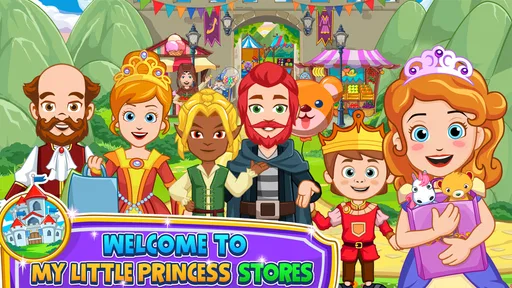
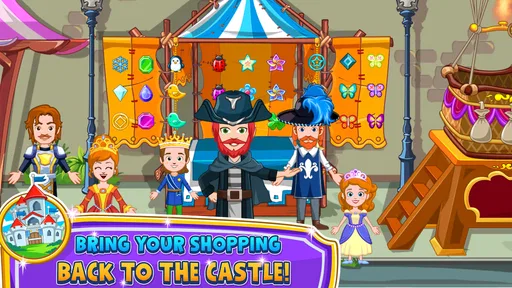
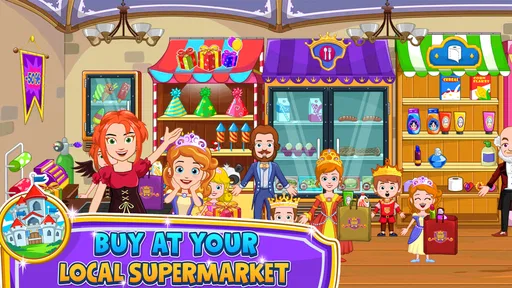
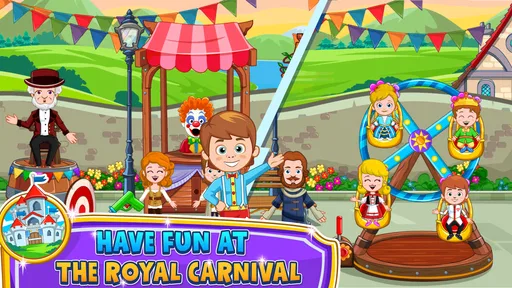
- Multiple locations offer varied settings to explore and interact with.
- Simple tap-based controls are easy for children to understand.
- Open-ended play allows children to create their own scenarios.
Limitations of My Little Princess : Stores
- Some areas and characters require additional purchases to unlock.
- The large number of interactive objects can feel overwhelming at first.
- Replay value may be limited for children who prefer structured goals.
- Performance can vary on older or less powerful devices.
- Parental supervision is recommended for in-app purchase management.
Other Releases by My Town Games Ltd
View All
My Town Home: Family Playhouse
Educational4.3

My Town : Beach Picnic
Educational4.0

My Little Princess : Wizard
Educational3.7

My Town : Daycare
Educational4.1
Similar Picks in This Category
View All
Little Panda Policeman
BabyBus4.0

Monster Trucks Game for Kids 2
Raz Games4.1

Little Panda's Chinese Recipes
BabyBus4.4

Little Panda's Restaurant
BabyBus4.4

Little Panda's Ice Cream Games
BabyBus4.3

Baby Panda Care
BabyBus3.8
Frequently Asked Questions
What is My Little Princess: Stores?
My Little Princess: Stores is a child-friendly role-playing and exploration game where players can visit and interact with different shops and locations in a colorful princess-themed world. Rather than following a strict storyline, the game encourages open-ended play. Children can explore rooms, move characters, discover objects, and create their own scenes using imagination and simple touch controls.
Is My Little Princess: Stores suitable for children?
The game is designed mainly for young children and offers a gentle, cartoon-style environment without complex combat or difficult objectives. Its intuitive controls make it easy for children to pick up and play, although younger users may still benefit from parental guidance. Parents should also review the available in-app purchases and device settings before allowing independent play.
Does My Little Princess: Stores require an internet connection?
Many of the basic exploration features can generally be enjoyed offline after the game has been installed, which makes it convenient for travel or situations without Wi-Fi. However, certain functions, updates, advertisements, or purchase-related services may require an internet connection. Availability can vary by device and version, so checking the store listing is recommended before downloading.
Is My Little Princess: Stores free to download?
The game may be available as a free download, but access to all locations, characters, objects, or activities can depend on in-app purchases or the edition offered in your region. Before installing it, parents should check the current Google Play or App Store listing for pricing details. Device-level purchase restrictions are also advisable for child accounts.
What can players do in My Little Princess: Stores?
Players can explore store-themed environments, tap and move characters, interact with objects, and arrange scenes in a creative way. The experience focuses more on imaginative play than winning or completing missions. Children can invent stories around the princess and other characters, making the game especially suitable for short play sessions and free-form activities rather than competitive gaming.
Play our best games!


